What golf drills can I do at home?
Most swing faults can be worked on at home without a ball: rehearsals for posture, rotation, tempo and the first move down. You need a club or a towel, a mirror or a chair helps, and ten minutes a day does more than an occasional long session.
What works at home
Posture and early extension: rehearse the downswing with your backside against a chair or wall so the hips stay back.
Rotation and sway: turn with a club across your chest and feel the trail hip turn rather than slide.
Tempo: swing to a count with no ball. Tempo is a ratio, so it works at any speed, even indoors.
Transition: rehearse the first move down slowly, several times, so it is automatic when you get to the range.
Make it stick
Keep it short and daily. Five to ten minutes of slow, exact rehearsals beats an hour once a week.
Check positions in a mirror or a dark window, then close your eyes and feel them.
Take the same drill to the range so the feeling meets a real ball.
Drills to start with
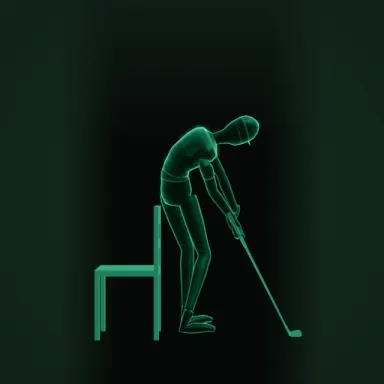
Chair Hip-Hug (Home)
Indoor no-ball version: seat on a chair or wall from setup through impact
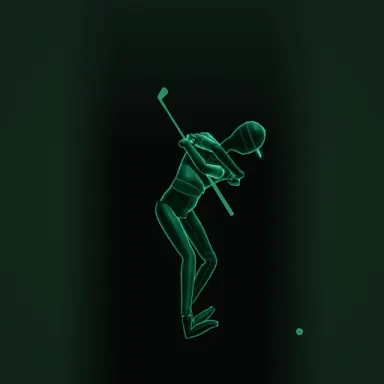
Club-Across-Chest Turn
Trains a real chest turn that tilts, not an arm lift or a flat spin
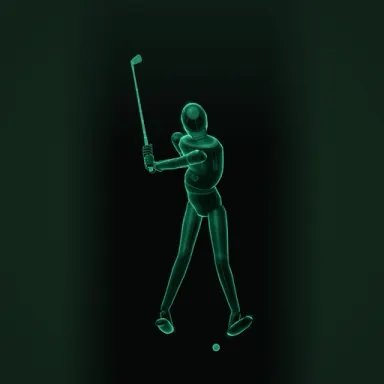
Count-to-Four Tempo
A backswing three beats long and a downswing one beat long, at any pace
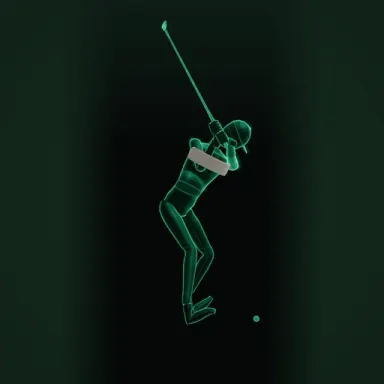
Towel Connection Swings
A towel under the arms so the chest turn moves the club, then full swings to feel it
Questions golfers ask
Can I improve my golf swing without going to the range?
Yes, especially posture, rotation and tempo, which do not need a ball. Ball flight is the final test, so pair home work with range sessions when you can.
Do I need a net at home?
No. Most useful home drills are rehearsals without a ball. A net helps with contact and commitment but is not required.
Is it safe to swing a club indoors?
Check the ceiling height and the space around you first. Many home drills use half swings, a towel or a club held across the chest, which need much less room.