Golf swing stats explained: tempo, hip turn, shoulder turn and more
What seven common swing stats mean in plain words, and a drill for each.
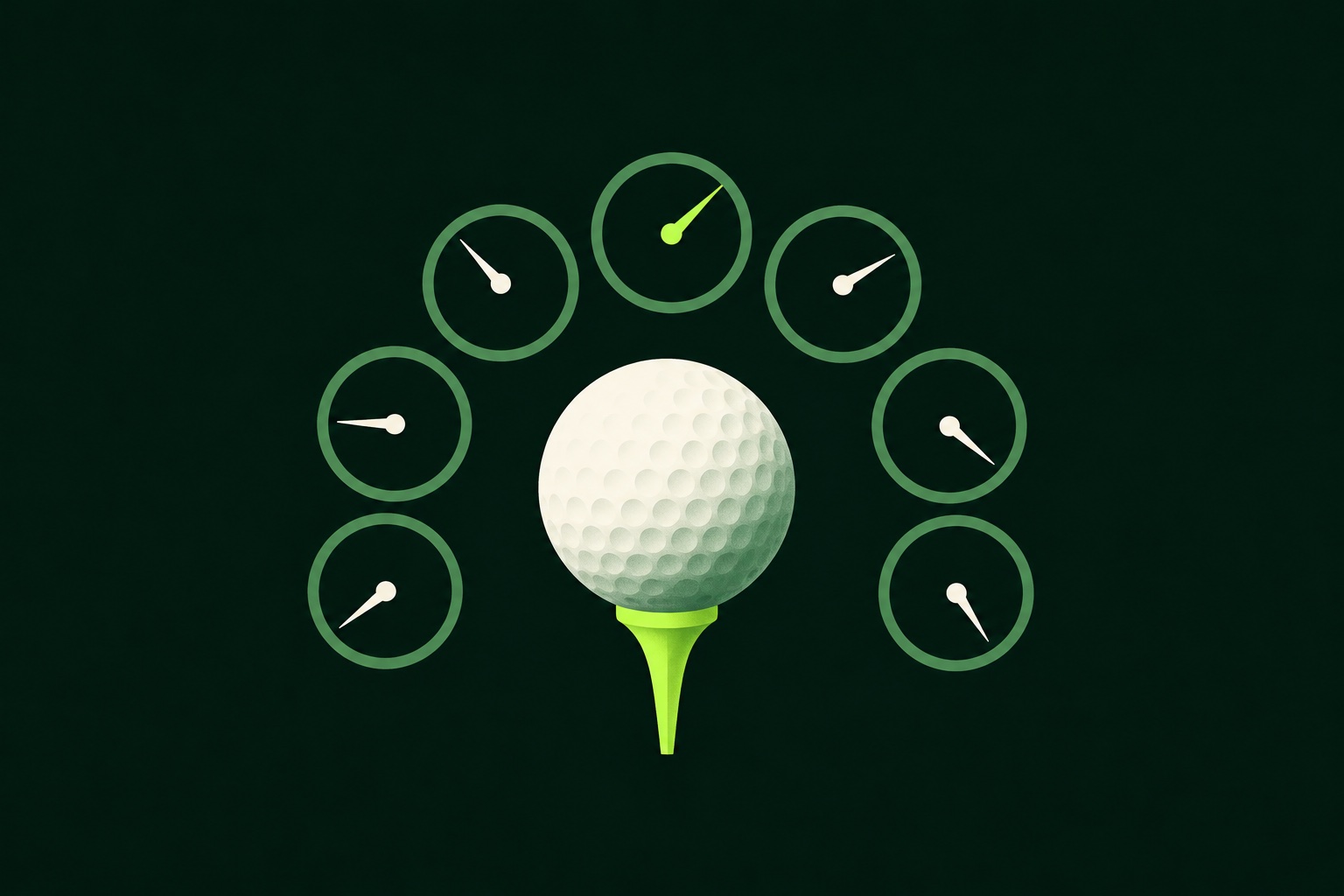
Swing stats describe how your body moved, not where the ball went. These seven come up most often. Here is what each one means, why it matters and a drill that works on it.
Tempo
What it is. How long your backswing takes compared with your downswing. It is a ratio, not a speed.
Why it matters. A 3-to-1 rhythm is often taught for full swings. When the ratio drops well below that, the downswing is usually starting before the backswing has finished. In 10,700 range swings, the median was about 2.4 to 1.
Drill. Count-to-Four Tempo.
Hip turn
What it is. How far your hips rotate away from the target in the backswing, and through to the target at the finish.
Why it matters. Hips that turn load the trail side. Hips that slide sideways are a sway, and the low point of the swing moves with them.
Drill. Hip-Stick Turn: Back.
Shoulder turn
What it is. How far your shoulders rotate in the backswing.
Why it matters. A full shoulder turn gives the club room and time. A short one usually means the arms lift on their own and the swing gets steep.
Drill. Club-Across-Chest Turn.
Swing plane
What it is. The tilted circle your hands and club travel on, and whether the downswing comes from inside or outside it.
Why it matters. A downswing that comes over the plane cuts across the ball. That is the over-the-top move behind most slices.
Drill. Headcover Gate.
Release
What it is. How your wrists and forearms let the club go through impact.
Why it matters. Release too early and you cast, losing speed before the ball. Flip the hands at the ball and contact gets thin or fat.
Drill. L-to-L Half Swings.
Head movement
What it is. How much your head shifts or drops from setup to impact.
Why it matters. A little movement is normal. A lot moves the bottom of your swing, which shows up as inconsistent contact.
Drill. Feet-Together Center Swings.
Holding your finish
What it is. Whether you arrive in a balanced finish and stay there.
Why it matters. A finish you can hold means you turned all the way through and stayed in balance. Falling back or stepping out points to a stall or a swing that slowed down.
Drill. Hold the Finish for Three.
Where these numbers come from
PocketCaddie reads these from the motion sensors in the phone in your pocket. No camera, no tripod. Each session, every stat is sorted into Work on, Good or Watch, so you see what needs practice first. Tap a stat to open a drill for it.
On iOS, Apple Watch and compatible AirPods add more stats, and 3D Replay shows your estimated body and hand path.
PocketCaddie is available on iOS and Android. Features depend on your phone, connected sensors and app version.
PocketCaddie is the coach in your pocket that learns your swing. No video. Just golf.